Explore Eddyfi Technologies Product Lines
 Automated Vision Systems
 ET & UT Solutions
 Nuclear Steam Generators
 Remote Monitoring Solutions



 Robotics Solutions



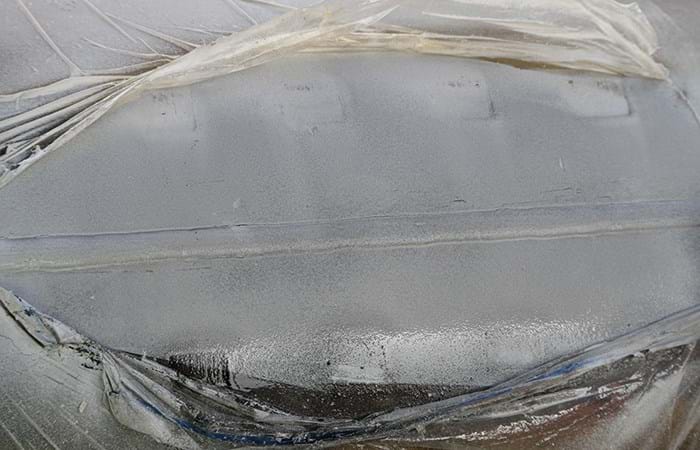
Stress corrosion cracking (SCC) is the result of stress and a corrosive environment on metal, and therefore is common on external carbon steel pipeline surfaces in contact with corrosive soil. Pipelines are susceptible to bursting from SCC without any prior wall thinning, highlighting the importance of early detection.
Details
Stress corrosion cracking (SCC) is the result of stress and a corrosive environment on metal, and therefore is common on external carbon steel pipeline surfaces in contact with corrosive soil. Pipelines are susceptible to bursting from SCC without any prior wall thinning, highlighting the importance of early detection. Stress corrosion cracking appears in both gas and liquid pipelines, but the latter is more common, with potentially catastrophic results. Because of the nature of SCC colonies, surface-breaking cracks in the form of shallow and extremely fine branches are challenging to detect and size with traditional non-destructive testing (NDT) techniques.
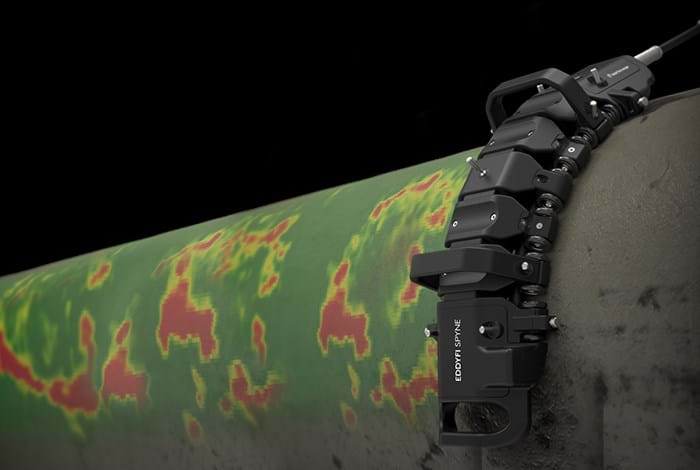
Spyne™, an adaptable surface eddy current array (ECA) screening tool, is specifically engineered to maximize productivity for the detection of SCC in various critical components including high-pressure gas pipes, vessels, tanks, pipelines and more. It can accommodate a range of flexible probes designed to suit ferritic and non-ferritic alloys and is configurable for inspecting external diameters from 150 millimeters (6 inches) to flat surfaces. The Spyne helps ensure pipeline integrity during stress-corrosion cracking direct assessment (SCCDA). Although magnetic-particle inspection (MPI) and liquid-penetrant inspection (LPI) are regularly used to effectively to detect SCC, these methods are often impractical and come with known drawbacks: surface preparation, manual length sizing, high operator-dependence, and lack of digital data. Spyne compares favorably against MPI and LPI for SCC detection, thanks to a higher Probability of Detection (PoD).
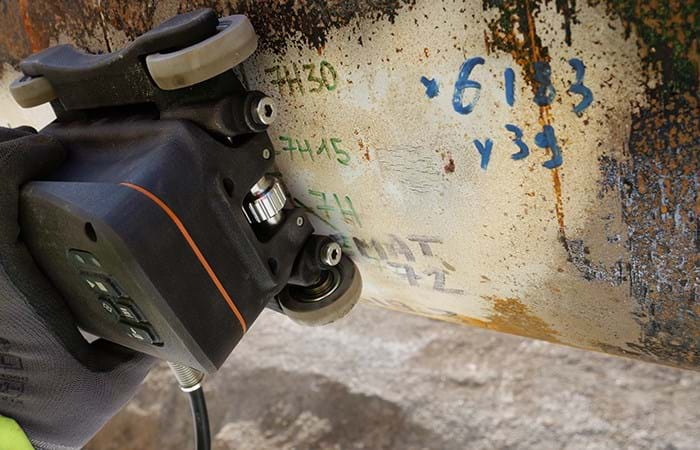
Once SCC is detected, the high-resolution Sharck probe can be used to accurately size the depth. The probe uses tangential eddy current array (TECA™) technology and has a flexible inspection interface offering a wide coverage compatible with pipes 254 to 1,220 millimeters (10 to 28 inches) in diameter. Able to tolerate coatings up to 2 millimeters (0.08 inches) thick, the Sharck probe removes the need for pre- and post-inspection surface preparation, while offering depth sizing on shallow SCC clusters, something known to be very difficult.
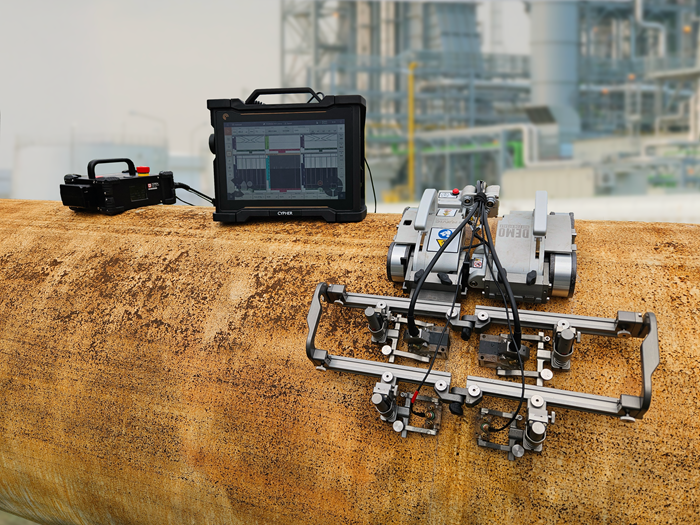
Cypher® is a next-generation phased array ultrasonic testing (PAUT) solution designed for the examination of austenitic and ferritic piping welds. It provides a high-confidence approach for the detection and sizing of surface-connected discontinuities on the outer diameter of piping systems susceptible to stress corrosion cracking (SCC). Cypher integrates conventional ultrasonic testing (UT), PAUT, time-of-flight diffraction (TOFD), and advanced total focusing method (TFM) imaging within a streamlined and intuitive acquisition environment. High-resolution TFM, delivered at industry-leading speeds, enhances spatial resolution and near-surface sensitivity, enabling more reliable detection, characterization, and sizing of SCC indications compared to conventional inspection techniques.
Eddyfi Technologies offers advanced, reliable, and intuitive NDT solutions for stress corrosion cracking inspection applications, ensuring the integrity of pipelines and other critical assets across the oil and gas, offshore, chemical, and a range of other manufacturing industries.